Hi ,
Thank you so much if you wrote in last week to share your wishes for new quilting tutorials. Josh and I were overwhelmed with the response and loved hearing from you all. We both apologize if we have yet to write back to you--we're still reading through all of your wonderful suggestions!
After that
comes the hard part - organizing so many ideas and suggestions and picking a few to start with.
Josh has helped me out by starting an Excel file so I can easily sort through all the data and find the most popular topics to start with.
But even if you want to learn something obscure like quilt painting or incorporating photos into your quilt, don't worry. Often times I gravitate to the obscure because it just sounds interesting to play
with.
And that's what this is all about - play, exploration, and happy fun.
More Progress in the Rainbow Baby Quilt |
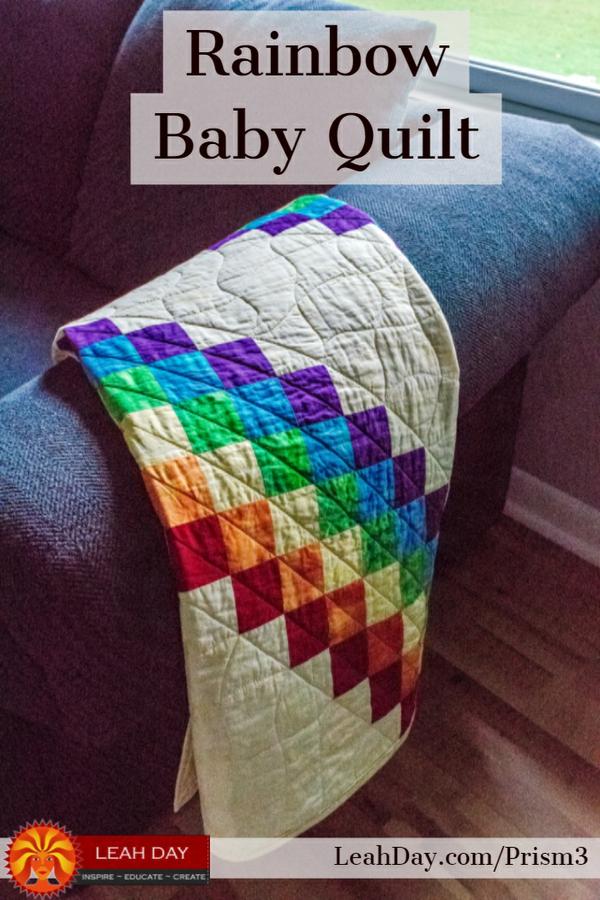
Speaking of Happy Fun, be sure to check out the latest post for the Prism Path baby quilt.
This week we're finishing up with piecing completely!
When you watched the video, did you catch my mistake?
My layout had one piece flipped around, but thankfully I caught it after turning off the camera and didn't end up with a weird spot in my Bargello quilt.
In order to piece Prism Path, begin by arranging all the pieces on your table in rows. Use
the diagram on page 92 of the book Explore Walking Foot Quilting to guide you.
While the pattern and obvious rainbow design are very eye-catching, it can require a bit of thinking in order to get this quilt arranged properly.
The Best Thread for Quilting |
One of the most common questions I receive each week is about thread. What is the best thread for quilting? What is the best thread for piecing?
Honestly, I think the best thread is the thread your machine likes best. It's no fun to try to piece or quilt when you're machine is trying to eat the thread instead of stitch
it!
But that can still be hard to wade through and test all the different brands and types. So I'll just tell you my favorites:
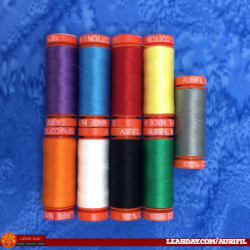
I love Isacord thread for quilting. Yes, this is a polyester embroidery thread and that often gets raised eyebrows when I tell quilters I quilt with it. It's wonderful for quilting because it's thin and looks beautiful on your quilt no matter which style of quilting you use. It's also strong so you can do things like
travel stitching and not worry about annoying thread breaks. Click Here to find Isacord Thread.
For piecing, I love Aurifil 50 weight cotton. This thread is also very thin and virtually lint free. It's important to find a thread with very little lint because that's the stuff that can build up inside your
machine and gum up the works. This cotton thread can be used for piecing, applique, and quilting too.
Scant Vs. Quarter Inch Seams |
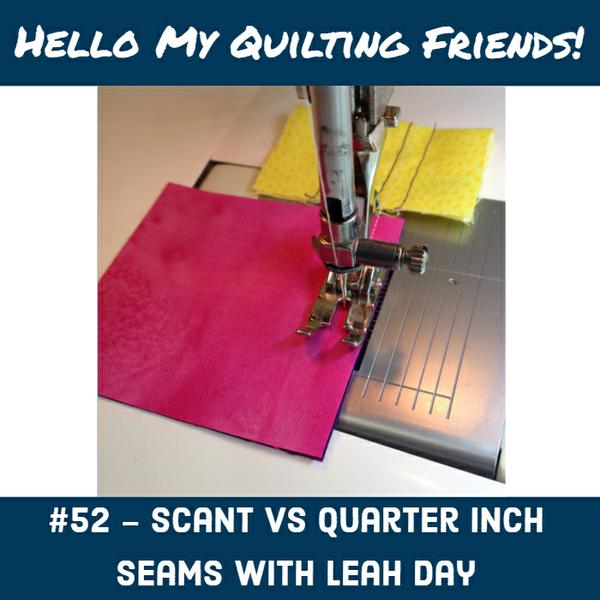
Do you have a quilting pet-peeve? I have several, but one of the biggest is my issue with scant seam allowance.
If you've never heard of it before, watch out! Scant seam allowance is hard to explain, hard to understand, and even harder to stitch. I decided to take this on as a Great Quilting Debate last week and challenge the
idea of scant verses 1/4-inch seams.
Make sure to listen all the way to the end. Let's just say I had a little glitch out with the word
scant.
I hope you can see that it's not really the size of the seam allowance, but the accuracy and precision that's the real goal in quilt piecing.
If you're wanting to improve your piecing, keep a ruler near your machine and measure the finished piece. If it doesn't come out the right size, figure out if the seam allowance was too big or too small and adjust accordingly for the next seam.
Keep measuring your
patchwork one seam at a time and you will slowly see improvement with every seam you stitch.
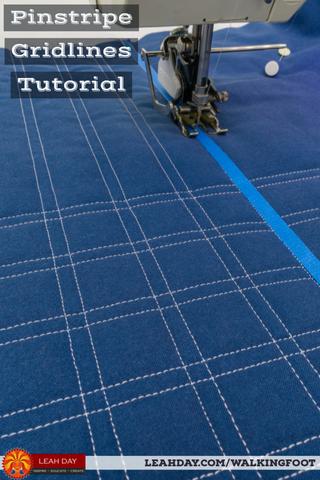
Pinstripe Gridlines Tutorial |
What happens when you quilt Pinstripes, then rotate the quilt, and quilt Pinstripes again? You get Pinstripe
Gridlines!
This quilting design is perfect for adding a touch of elegance and formality to any quilt.
The key to quilting Pinstripe Gridlines is the same for any grid style design - keep the quilt flat, evenly space your lines, and watch out for ripples, puckers, or pleats as you stitch back over the first set of lines.
When I began this walking foot quilting journey, I would always begin grid designs by quilting all the lines running in one direction, then rotate the quilt and stitch all the lines in the other direction.
These
days I mix it up a bit and stitch half the lines running in one direction, then quilt half the lines running in perpendicular.
This feels a little faster and I find it also helps avoid puckers and pleats that can easily form when you quilt over the first set of lines.
The Historic Quilts of Hart Square Village |
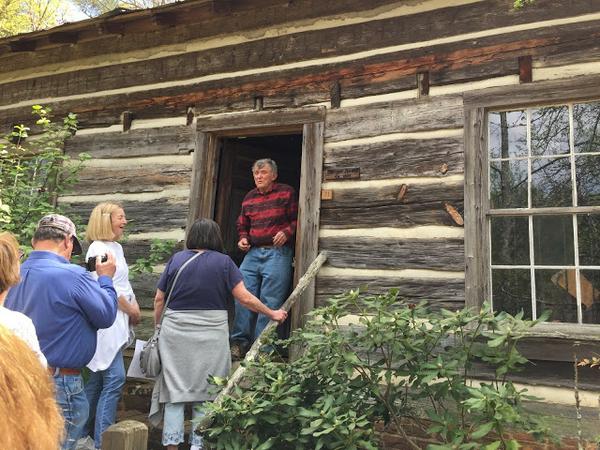
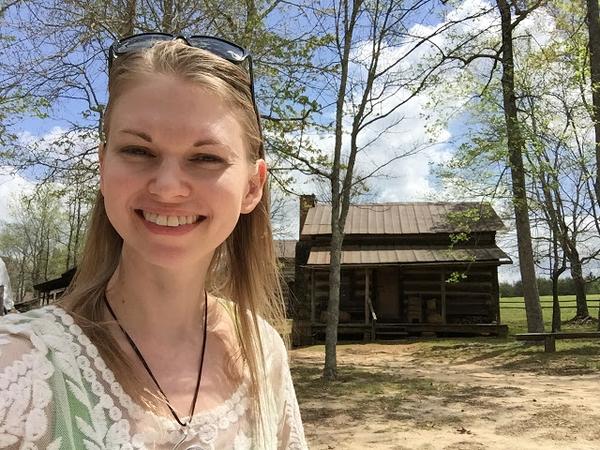
On Saturday, Dad, Josh, James, and I went to Hart Square for their Founder's Day celebration. Hart Square is an amazing place built by Bob and Becky Hart and their family.
Click Here to learn more
about Hart Square.It's hard to describe this exactly, but this seems the most fitting. Quilters collect fabric, knitters collect yarn, blacksmiths and welders collect metal. Dr. Bob Hart collects log cabins! This is actually the largest collection of historical log cabins in the United States, but they are so much more than just a set of buildings.
Bob became interested in the history behind it - what is was that tool used for? Why was that house built that way? And began collecting and preserving all the little details of life to go along with
the houses.
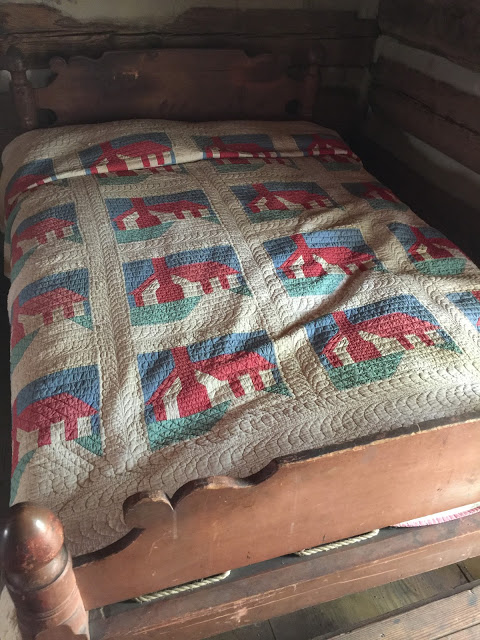
In almost every house I entered, hand pieced, hand quilted quilts were displayed on the beds, hung on the walls, and draped over the furniture.
Along with quilts they have dishes, linens, knives, and every kind of tool imaginable.
It's a level of history and preservation that I've honestly never seen before. Since yesterday, I've tried to put my finger on why this feels so incredible. It's a bit like Renaissance Festival in that it's a chance to step back in time and appreciate how people lived many years ago.
But to me, Hart Square is even more
magical and wonderful because it's REAL.
This isn't a magical fantasy world with dragons and princesses. This is how we used to live and raise our kids, in tiny cabins that had to be bitterly cold in the winter and very warm in the summer.
It feels magical I think because the cabins have been so well preserved and so much attention to detail has been given to filling them with historically accurate furniture, quilts, and accessories.
I had
an amazing time with my family and saw so many beautiful quilts.
I left feeling filled with inspiration and ideas and a much deeper sense of appreciation for the comfortable life I get to live in the twenty-first century.
|
|
|