Stitching Silly Thoughts

Published: Wed, 10/16/13

News from Leah Day
Hi ,
Here's an interesting question: what do you think about while quilting?

Lately I've been working on my habit of chewing on negative thoughts. A lot of times when I'm quilting, in the back of my mind a little voice is saying mean things like "Wow, your quilting sucks!" and "I'm so glad the camera's not on because you just made a HUGE mistake!"

This buzzing background noise in the back of my head is really getting old, so I'm actively working to change those negative thoughts. Whenever I catch myself harping on my work, I say "STOP!" really loud and then say two positive things about myself or the quilt I'm working on.

The phrase that is most coming to mind is actually something my son said to me in a super silly way. He said "I lub you Leah!" He had a stuffy nose that day so he couldn't really pronounce the word "love" very well. It made me laugh out loud and every time I say that to myself, I always smile.

So I'm learning to stitch with love, and a kind, even silly voice in my head. If you catch yourself with an inner quilting critic that's only giving you grief, you might want to give this a try this week too!
Now let's check out some new quilting designs which I hope you will quilt with love, so no beating yourself up if you stitch off a line or in the wrong direction. Chances are no one will notice except you!

62. Wiggle Maze - This fun, wiggly design works from Edge to Center so it will be a great fit in the sashing or borders of your next quilt. Stitch only one side of this design around a block to make it really stand out on the surface of your quilt.

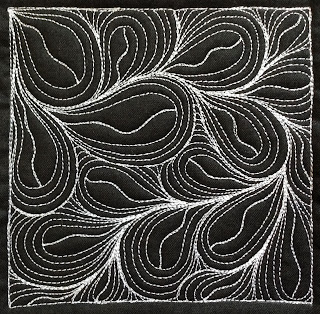
63. Split Paisley - Here's a super simple variation of Paisley with only an extra wiggly line inserted down the center. Watch the video to see me make some mistakes and figure out easy ways to fix them by adding more lines of quilting to the design.
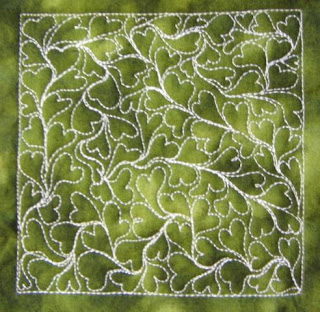
64. Lotus Ripple - Are you looking for a soft, flowing design to stitch quickly through your next quilt? Give Lotus Ripple a try and you'll also gain great skills for quilting feathers and echoes all at the same time.

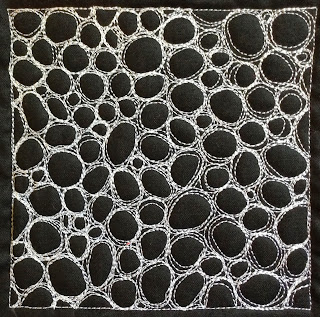
65. Underwater Rocks - This is definitely my favorite design of the week. The basic steps are identical to pebbling, but with the additional rule: stitch each circle multiple times, and stitch them imperfectly. The extra thread and ripples of echoes around the edges makes this free form design super easy to stitch!

Find all of these articles plus hundreds more right here on the Free Motion Quilting Project.
Baste Your Quilts Quickly and Painlessly
Yesterday I held my first Live Chat on facebook with Craftsy and answered as many questions as I could within 2 hours. You can see all the questions and answers right here.

One of the most common questions asked was on basting: how to do it, what I use, and how to get those layers together securely so they don't cause issues during quilting.

So here's the steps I use to baste my quilts:

1. Starch and press both the top and back
- I use spray starch and a hot dry iron to press any wrinkles out of the quilt top and back, and take out the stretch in the fabric as well. You really want these layers to be stiff so they don't stretch out of control while quilting and cause pleats on the front or back of the quilt.

2. Secure the backing first - I secure the backing fabric to the table surface using elastic strips which hold the fabric tight to the surface of the table. You can also use masking tape or table clamps for this instead. The goal here is to get the backing TIGHT because it's the side you can't see while quilting and it's far easier to stitch pleats into a quilt that has a loose, puddly backing fabric.

3. Spread out the batting and top - Next spread out the quilt batting and take your time smoothing it out completely from the center to the outside edges. Once all the wrinkles are out and it feels smooth, go over it one more time with your hands just to make sure. Top with your quilt top and repeat the spreading and smoothing motions again.

4. Insert your pins
- I use Clover flower head straight pins and put a little bend into them so they easily go into the fabric and up out the other side. I cap each pin with a Pinmoor which locks it in place and holds the layers together securely.

I prefer Pinmoors over the safety pins I used for years because they're easier to use and don't tear up my hands. They're far easier to take out of the quilt while free motion quilting especially for quilters with issues with grip or pain in their hands.

You'll want to place your pins around every 4 inches to ensure the quilt holds together tightly. After you've completely covered the quilt top, remove the tape or elastic holding the backing fabric to the table and you'll be ready to quilt!

Feeling confused? Learn more about Pinmoors and watch a video on basting your quilt right here!

Let's go quilt,

Leah Day